
Pain with sex is more common than most people realize—but that doesn’t mean it’s something you should have to live with.
At Redefine Physical Therapy & Wellness, we work with individuals who are ready for a more personalized, thoughtful approach to pelvic health—one that looks beyond quick fixes and gets to the root of the issue.
If you’ve been told to “just relax” or that it will improve with time, you’re not alone. But if the pain is still there, your body is asking for something different.
What Causes Pain with Sex?
Pain with sex (clinically referred to as Dyspareunia) is often related to how the pelvic floor muscles are functioning.
In many cases, it’s not about weakness.
Instead, we see a pelvic floor that is:
- Holding onto tension
- Guarding or anticipating discomfort
- Struggling to fully relax and lengthen
This can create a cycle of:
anticipation → tension → discomfort → more anticipation
Your body isn’t working against you—it’s trying to protect you. Our goal is to help it feel safe enough to respond differently.
A More Intentional Starting Point
Rather than forcing change, we start by creating the right environment for your body to shift.
Here are a few foundational strategies you can begin with:
1. Breathe in a Way That Allows Your Body to Soften
Your pelvic floor and diaphragm are closely connected.
Instead of bracing or holding tension, try:
- Inhaling through your nose and allowing your ribs to expand
- Letting your pelvic floor gently drop or soften
- Exhaling slowly without gripping through your core or glutes
This isn’t about doing it perfectly—it’s about introducing a sense of ease and space.
2. Reduce Friction and Add Support
Even when you feel mentally ready, your body may benefit from additional support.
Using lubrication can:
- Decrease irritation
- Reduce protective muscle guarding
- Improve overall comfort
This is often one of the simplest and most effective adjustments.
3. Address Tension Beyond the Pelvic Floor
The pelvic floor does not work in isolation.
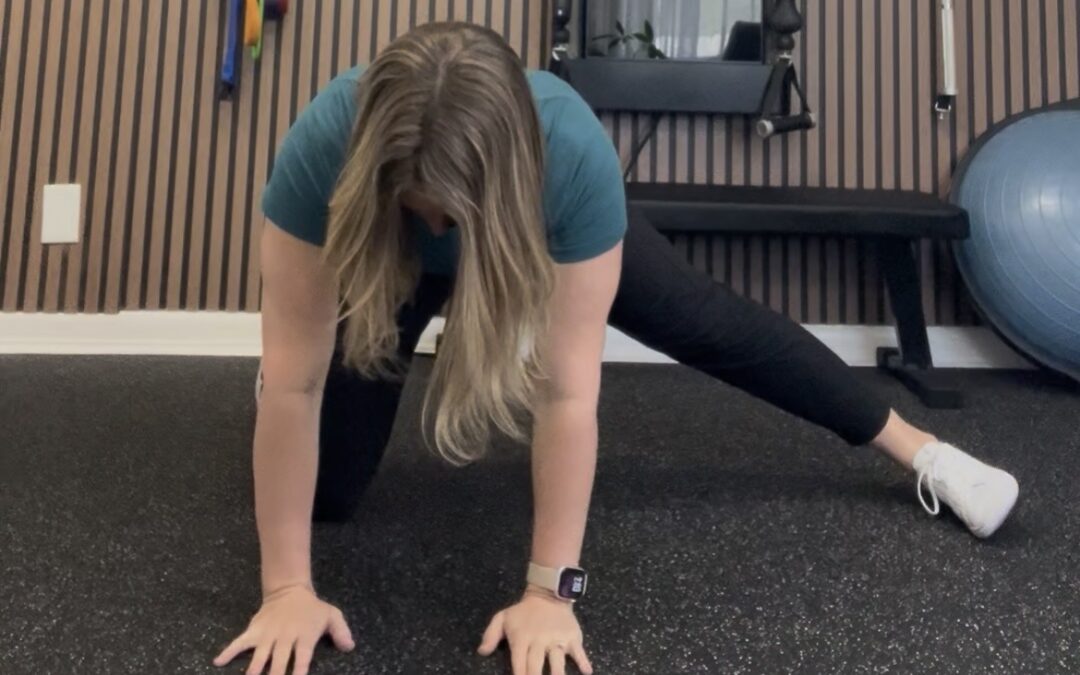
Tension in surrounding areas—particularly the inner thighs (adductors), hips, and lower abdominal wall—can contribute to discomfort.
Gentle, supportive movements such as:
- Butterfly stretch
- Hip opening work
- Supported deep squat positioning
…can help your body transition more comfortably.
4. Shift Away from Pushing Through Pain
One of the most important (and often overlooked) steps is this:
Pain is not something your body benefits from pushing through.
Instead:
- Slow the pace
- Adjust positioning
- Allow for pauses when needed
This helps your nervous system begin to associate intimacy with safety rather than threat.
Are Kegels the Answer?
Not always.
For individuals experiencing pain with sex, the pelvic floor is often already overactive.
In these cases, the focus is less on strengthening and more on:
- Downtraining
- Coordination
- The ability to fully relax
Strength becomes important later—but only when it’s appropriate for your body.
A More Personalized Approach to Care
While these strategies are a meaningful place to start, ongoing discomfort typically has a deeper root.
At Redefine Physical Therapy & Wellness, our approach is:
- One-on-one and individualized
- Rooted in movement, nervous system regulation, and whole-body care
- Designed to help you feel confident and comfortable in your body again
We take the time to understand your experience, your goals, and your body—so your plan of care reflects you.
When You’re Ready for More Support
If you’re experiencing pain with sex, know this:
You are not alone.
You are not broken.
And this is something that can improve with the right approach.